
Welding Training School
Become a fully qualified semi-skilled welder in just 1 month at Real Skills Technical FET.
Welding training at Real Skills Technical FET is a 1-month intensive programme aligned to SAQA US 24214, quality-assured by MERSETA (Manufacturing, Engineering and Related Services SETA). Conducted entirely in our fully equipped welding workshop — with individual welding bays for every student — the course develops the complete skill set required of a professional welder. You will master shielded metal arc (stick/MMA) welding, MIG/MAG welding, TIG welding basics, and oxy-acetylene gas welding, along with electrode and wire selection, joint preparation, welding in multiple positions, weld quality inspection, and OHS compliance. Graduates leave with a Certificate of Competence aligned to SAQA US 24214, qualifying them as full semi-skilled welders recognised across South Africa's construction, mining, manufacturing, and heavy engineering industries.
Welding Training — Course Overview
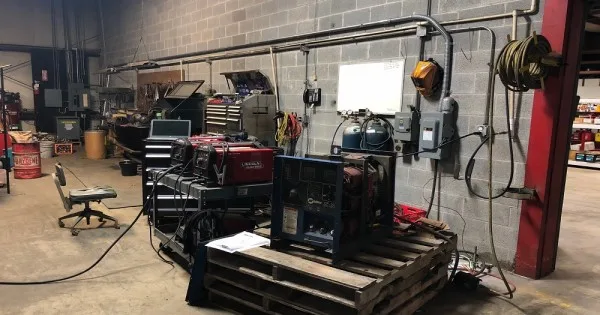
Our welding course is built entirely around hands-on workshop practice. Every student has their own dedicated welding bay for the full month — not shared, not rotated. Theory is integrated into each practical session, so you understand the metallurgy and parameters behind every weld you lay. The course progresses across 4 structured weeks: from fundamental welding safety and arc welding basics through to MIG/MAG fabrication welding, TIG welding, pipework, and final competency assessment.
Full Semi-Skilled Welder Qualification
1-month intensive workshop programme — MMA (stick), MIG/MAG, TIG, oxy-acetylene & pipe welding
- Full 1-month dedicated welding bay training
- Shielded metal arc (MMA/stick) welding — all positions
- MIG/MAG welding — flat, horizontal & vertical
- TIG welding basics — mild steel & stainless
- Oxy-acetylene gas welding & cutting techniques
- Joint preparation: grinding, bevelling & fit-up
- Electrode and wire selection — type, size & polarity
- Welding positions: flat, horizontal, vertical, overhead
- Weld quality and visual inspection — defect identification
- SAQA 24214 aligned · MERSETA quality-assured
- OHS Act, welding hazards & PPE compliance
- Certificate of Competence on successful assessment
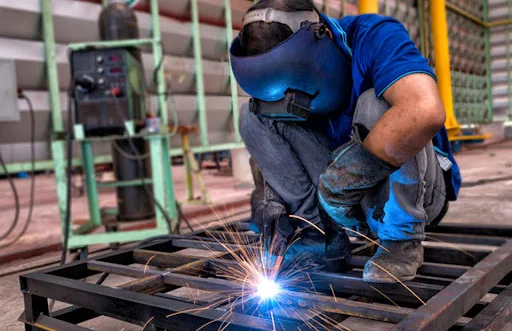
SAQA US 24214 — Semi-Skilled Welder Qualification
The SAQA Unit Standard 24214 is the nationally registered unit standard that underpins the semi-skilled welder qualification in South Africa, registered on the National Qualifications Framework and quality-assured by MERSETA (Manufacturing, Engineering and Related Services SETA). A semi-skilled welder is a competent metal-joining tradesperson capable of welding mild steel, carbon steel and structural steel using shielded metal arc (stick/MMA), MIG/MAG, and gas welding processes, across multiple joint types and welding positions.
Welding is one of the most consistently in-demand trade skills across South Africa's entire industrial economy. Every construction project, mine, manufacturing plant, oil and gas facility, and engineering workshop requires qualified welders — and the national shortage of MERSETA-certified welders means that competent, qualified graduates are placed quickly into employment across all sectors. Our training at Real Skills Technical FET covers every practical and theoretical outcome required to qualify as a full semi-skilled welder under SAQA 24214.
Workshop Modules — What You Master in 1 Month
Welding Safety & OHS
OHS Act, welding fume hazards, UV radiation, PPE selection, hot-work permits and fire watch duties
Arc / MMA (Stick) Welding
Shielded metal arc welding — machine setup, electrode selection, striking arc, running beads, all positions
MIG/MAG Welding
Gas metal arc welding — wire selection, shielding gas, parameters, flat, horizontal & vertical welding
TIG Welding
Tungsten inert gas welding basics — mild steel and stainless steel, torch setup and arc control
Oxy-Acetylene Welding
Gas welding — flame adjustment, fusion welding of thin plate, bronze welding and hard-facing basics
Gas & Plasma Cutting
Oxy-fuel cutting for joint preparation, plasma arc cutting on mild steel and edge quality assessment
Joint Types & Fit-Up
Butt joints, fillet joints, T-joints, lap joints and corner joints — preparation, alignment and tacking
Welding Positions
Flat (1G/1F), horizontal (2G/2F), vertical up (3G/3F), and overhead (4G/4F) positions on plate and pipe
Weld Inspection
Visual weld inspection — identifying porosity, undercut, overlap, cracks and lack of fusion in weld runs
Electrode & Wire Selection
AWS/ISO electrode classifications, rutile and basic electrodes, DCEP/DCEN polarity and storage rules
Distortion Control
Weld distortion causes and control — tacking sequences, back-step welding, clamping and pre-heating
Weld Symbols & Drawings
Reading basic fabrication drawings, weld symbols (ISO 2553), joint types and weld size specifications
4-Week Training Structure — Week by Week
The welding course follows a carefully sequenced progression — each week builds directly on the last. Week 1 builds your arc welding foundation; Week 2 adds MIG/MAG welding and multi-position techniques; Week 3 introduces TIG, gas welding, and pipe welding; Week 4 covers advanced positions and full competency assessment. Every day is a welding bay day.
Week 1 — Welding Safety, Arc Welding & Joint Fundamentals
Week 1 Workshop Programme
- OHS Act & Welding Safety: Occupational Health & Safety legislation for welding environments — welding fume hazards, UV arc eye protection, hot-work permit systems, fire watch duties, compressed gas cylinder safety, and mandatory PPE including auto-darkening helmets, leather gloves, aprons and safety boots
- Introduction to welding processes: Overview of all welding processes covered in the course (MMA, MIG/MAG, TIG, oxy-acetylene), their industrial applications, comparative strengths, and how each process is selected for different materials, thicknesses and positions
- Arc welding machine setup: Power source types (AC/DC), polarity selection (DCEP/DCEN), amperage settings for different electrode sizes and plate thicknesses, earth clamp placement and cable management
- Electrode classification and selection: AWS/ISO electrode naming system — E6013, E7016, E7018 and specialist electrodes — understanding the meaning of each digit, and matching electrode type to base metal, position and service requirement
- Striking and maintaining an arc: Scratch-start and lift-arc techniques, maintaining correct arc length, travel speed and electrode angle for consistent bead profiles — running straight and weave beads on mild steel plate in the flat (downhand) position
- Joint types and fit-up: Butt joints (square, single-V, double-V), T-joints (fillet welds), lap joints, corner joints, and edge joints — fit-up, root gap setting, and tacking sequences for distortion control before full welding
- Flat position welding — MMA: Fillet welds and butt welds in the flat (1F/1G) position — multiple-pass welds, inter-run cleaning with chipping hammer, and wire brushing between passes. Weld visual inspection and sizing using weld gauges
Week 2 — MIG/MAG Welding & Multi-Position Techniques
Week 2 Workshop Programme
- MIG/MAG welding machine setup: Wire feeder setup, drive roll selection for solid and flux-cored wire, shielding gas selection (CO₂, Ar/CO₂ mixed, pure Ar), regulator and flow-rate setting, and torch liner condition assessment
- Wire and gas selection: ER70S-6 solid wire for structural MIG welding, E71T-1 flux-cored wire for site welding, shielding gas mixtures and their effect on arc characteristics, bead profile and spatter levels — selecting the correct combination for the application
- MIG welding in the flat position: Running flat fillet welds and butt welds in short-circuit and spray transfer modes — torch angle, travel angle, travel speed, contact-tip-to-work distance (CTWD), and avoiding common defects such as porosity and cold laps
- Horizontal (2F/2G) welding: MMA and MIG welding in the horizontal position — adjusting electrode angle and travel speed to prevent weld metal sagging, maintaining consistent leg length on horizontal fillet welds and managing weld pool behaviour in this position
- Vertical-up (3G/3F) welding: Vertical-up MMA welding using a weave technique — triangle and crescent weave patterns, pausing at the toes to prevent undercut, controlling the weld pool against gravity, and achieving full fusion at the root in vertical butt welds
- Vertical-up MIG welding: Adjusting MIG parameters for vertical-up welding — lower wire feed speed, reduced voltage, and the push technique on vertical MIG fillet welds. Comparing vertical MIG to vertical MMA in terms of penetration, appearance and productivity
- Distortion control and weld sequence: Understanding thermal distortion in welded fabrications — back-step welding, balanced welding sequences, pre-setting and clamping methods, and measuring distortion after welding to verify dimensional compliance
Week 3 — TIG Welding, Gas Welding & Pipe Welding
Week 3 Workshop Programme
- TIG welding fundamentals: TIG machine setup — HF start, scratch start, AC/DC selection, tungsten electrode types (EWTh-2, EWP, EWCe-2), tungsten preparation (grinding angle), shielding gas (pure Ar), torch assembly, and collet and back-cap selection
- TIG welding mild steel: Two-handed TIG technique — torch in one hand, filler rod in the other — maintaining torch angle, arc length, filler rod dip angle and travel speed. Running flat butt welds on 3 mm mild steel plate without porosity or tungsten contamination
- TIG welding stainless steel basics: Differences in TIG welding austenitic stainless steel (304 and 316) — interpass temperature limits, back-purge gas for stainless root passes, heat input control, and preventing sensitisation and heat tint in the HAZ
- Oxy-acetylene welding — flame types and technique: Setting up the oxy-acetylene plant, regulator pressures for different tip sizes, identifying neutral, carburising and oxidising flames, and their correct application — leftward and rightward welding techniques on thin mild steel plate
- Oxy-acetylene cutting for joint preparation: Cutting mild steel using the oxy-acetylene cutting attachment — straight-line cutting, bevel cutting for weld joint preparation, profile cutting using a template, and assessing cut quality (squareness, drag lines, dross)
- Pipe welding — joint preparation and fit-up: Preparing pipe joints for welding — pipe end squaring, bevelling using a grinder, root gap setting, back-purge for stainless, tacking in position (5G pipe — fixed horizontal), and tack weld quality before root pass
- Pipe root and fill passes — MMA: Welding the root pass of a fixed horizontal (5G) mild steel pipe joint using MMA — open root technique, bridge tacking sequence, keyhole technique, electrode manipulation and visual inspection of root fusion before progressing to fill and cap passes
Week 4 — Advanced Positions, Overhead Welding & Final Assessment
Week 4 — Final Assessment Programme
- Overhead (4F/4G) welding — MMA: Welding in the overhead position — arguably the most demanding welding position. Adjusting machine settings, electrode angle, arc length control, travel speed and body positioning to produce acceptable overhead fillet and butt welds without burn-through or excessive spatter
- Structural welding task — applied: Candidates independently weld a complete structural steel assembly from a drawing — marking off, tacking, welding fillet and butt joints in multiple positions, inspecting against dimensional and quality criteria
- Weld quality inspection — practical: Candidates inspect their own and peer welds against visual inspection criteria — measuring weld size, checking for undercut, porosity, overlap and cracking using weld gauges, and completing an inspection record in the format required by industry
- Distortion and repair: Identifying distorted or non-conforming weldments — rectifying by grinding out defects, re-welding, flame straightening where appropriate, and re-inspecting to confirm compliance before final submission
- Practical trade assessment — SAQA 24214: Full practical welding assessment aligned to SAQA US 24214 outcomes — assessed across MMA, MIG and relevant position welding by a qualified MERSETA assessor as Competent or Not Yet Competent
- Certificate of Competence issued: Successful candidates receive their Certificate of Competence aligned to SAQA US 24214, issued by Real Skills Technical FET and quality-assured by MERSETA — qualifying them as full semi-skilled welders, recognised by employers across South Africa and the region
Book Your Welding Training
1 month. R8,500. SAQA 24214. MMA · MIG · TIG · Gas welding. Certificate of Competence. Free accommodation included.
Your Credential on Completion — Full Semi-Skilled Welder
Candidates who achieve full competency across the practical assessment receive a formal credential from Real Skills Technical FET, aligned to SAQA US 24214 and quality-assured by MERSETA. This credential is recognised by construction companies, fabrication workshops, mines, engineering contractors, and plant operators across South Africa and the broader region.
Certificate of Competence — Semi-Skilled Welder
An official Certificate of Competence aligned to SAQA US 24214, issued by Real Skills Technical FET and quality-assured by MERSETA. The certificate confirms competency across the full scope of semi-skilled welder practice — MMA (stick) welding, MIG/MAG welding, TIG welding, oxy-acetylene welding, multiple joint types, multiple welding positions, and weld quality inspection. This is the primary credential that construction employers, fabrication shops, mines, and engineering contractors require when hiring qualified welders for workshop and site positions. On successful completion of this course, you qualify as a full semi-skilled welder.
Entry Requirements — Who Can Enrol
✅ Welding Training Entry Requirements
No prior welding experience is required — we build your welding skills from scratch over 1 month of intensive practice
Our admissions team will assess your background and advise you on readiness for the course. Candidates who have handled tools before or done basic metalwork typically progress faster in week 1 — but the course is designed to take a motivated beginner with zero welding experience through to full semi-skilled welder competency in one month.
Free Accommodation — Train From Anywhere
Why Welders Are in Constant Demand Across South Africa
Welding is the backbone skill of South Africa's construction, manufacturing, and mining economy. Every steel structure, every pipe, every pressure vessel, every vehicle chassis, and every industrial machine contains welds — and every single one of those welds was put there by a qualified welder. The demand for MERSETA-certified welders is structural and persistent, across every province and every industry sector.
Excellent Trade Salaries
A qualified semi-skilled welder earns between R12,000 and R30,000+ per month depending on process, position, industry, and experience. Coded pipe welders and TIG welders on petrochemical and power projects earn significantly more.
Mining Industry Demand
Every mine in South Africa — gold, platinum, coal, chrome, manganese, copper — requires structural welders on-site for continuous maintenance, fabrication and repair work on conveyors, tanks, pipes and structures.
Construction & Infrastructure
Steel-framed buildings, bridges, road infrastructure, power lines, water infrastructure — all use fabricated steel structures and pipework that require qualified welders at every stage of construction and maintenance.
Africa-Wide Opportunity
Infrastructure and energy projects across sub-Saharan Africa — in Zambia, Mozambique, DRC, Tanzania, Angola and Nigeria — create a continent-wide demand for South African-trained welders that far exceeds local supply.
Scarce Skill = High Security
Welding is officially classified as a scarce skill in South Africa. MERSETA-certified welders face minimal job insecurity — every sector that uses steel or pipe needs them, and employers compete to retain qualified welding personnel.
Rapid Career Progression
Progress from semi-skilled welder to coded welder, senior welder, welding foreman, and welding inspector. Each step brings a salary increase and broader career opportunities — welding qualifications stack and build continuously.
Career Paths After Welding Training
Mining Welder
Structural and maintenance welding on conveyors, chutes, tanks, pipes and plant structures in underground and surface mining operations.
Construction Welder
Structural steel welding and pipe welding on commercial, industrial and civil construction projects across South Africa.
Petrochemical & Pipeline
Pipe welding, pressure vessel welding and structural maintenance on refineries, power stations, gas facilities and chemical plants.
Fabrication Workshop
MIG and MMA welding in a structural fabrication shop — producing steel structures, tanks, bins, staircases, and custom fabricated items.
Africa Projects
Mining, energy and infrastructure projects across sub-Saharan Africa consistently recruit South African-trained welders for site and construction roles.
Coded / Pipe Welder
Build on your SAQA 24214 foundation to qualify as a coded welder — ASME IX or AWS D1.1 — for high-value pipe and pressure vessel welding positions.
Job Assistance Programme
Industry Connections
We work directly with construction companies, fabrication workshops, mines, engineering contractors, and plant maintenance operations who regularly hire our SAQA 24214 certified welding graduates by name.
CV Preparation
Our team helps you present your Certificate of Competence correctly on your CV — maximising your impact with site managers, HR departments, and engineering recruiters actively looking for qualified welders.
Vacancy Alerts
Registration in our graduate database means direct notification of welding vacancies at partner companies — often before positions are advertised. Welding vacancies fill fast; our network gets you there first.
Graduate Network
Join a growing community of working Real Skills welders across South Africa and sub-Saharan Africa — sharing job leads, contract opportunities, and field knowledge from active construction and fabrication sites.
Qualify as a Full Semi-Skilled Welder — Start Next Month
1 month. R8,500. SAQA 24214. MMA · MIG · TIG · Gas welding. Certificate of Competence. Free accommodation. Job assistance — all in one course.
Frequently Asked Questions
Everything you need to know about welding training at Real Skills Technical FET
Welding training at Real Skills is a 1-month intensive workshop course aligned to SAQA US 24214, MERSETA accredited. It covers four welding processes: MMA (stick/arc) welding, MIG/MAG welding, TIG welding basics, and oxy-acetylene gas welding — along with joint preparation, electrode and wire selection, welding in multiple positions (flat, horizontal, vertical-up, overhead), weld quality inspection, and full OHS compliance. Graduates qualify as full semi-skilled welders.
The welding course runs for 1 month (approximately 20 full working days), Monday to Friday. The 4 weeks cover: Week 1 — OHS, MMA arc welding, electrode selection, flat position welding; Week 2 — MIG/MAG welding, horizontal and vertical-up positions; Week 3 — TIG welding basics, gas welding, pipe joint preparation and pipe root welding; Week 4 — overhead welding, structural assembly, full practical assessment and certification.
You receive a Certificate of Competence aligned to SAQA US 24214, quality-assured by MERSETA — confirming full semi-skilled welder competency across MMA welding, MIG/MAG welding, TIG welding basics, oxy-acetylene welding, multiple joint types, and multiple welding positions. This credential qualifies you as a full semi-skilled welder recognised by employers across South Africa and the region.
Welding training costs R8,500 — all-inclusive. This covers the full 1-month course, your own dedicated welding bay for the full month, all welding consumables and materials, the formal MERSETA-aligned assessment, your Certificate of Competence, job placement assistance, and free accommodation for the full month next to the training facility. There are no hidden costs.
Prior welding experience is not required. The minimum requirement is Grade 9 (NQF Level 1) education, basic numeracy, physical fitness for workshop work, a steady hand, and the ability to attend full-time for 1 month. Some background in metalwork is advantageous but not a barrier. Our instructors build your welding skills from striking your first arc through to welding in all positions in 1 month.
Yes. Real Skills Technical FET provides free student accommodation for the entire 1-month course for all welding training students. The accommodation is located next to the training facility — no transport costs or commuting stress. Whether you're from the Eastern Cape, Limpopo, or travelling internationally, travel to Pretoria and your housing for the full month is covered at zero extra cost.
Industry Resources for Welders
Key official links for welding training, trade qualification, and the South African engineering industry
MERSETA
Manufacturing, Engineering and Related Services SETA — the quality assurance body for welding trade training in South Africa, accrediting providers and quality-assuring assessments and certificates.
Visit MERSETASAQA — US 24214
Official SAQA registration for Unit Standard 24214 — the semi-skilled welder unit standard. Access the qualification scope, outcomes and assessment criteria on the national qualifications register.
View on SAQADepartment of Labour
OHS Act regulations, welding safety regulations, hot-work permit requirements, and the engineering trade regulations applicable to welding operations on South African construction and industrial sites.
Visit WebsiteRelated Engineering & Trade Courses
Build a broader skills portfolio — pair welding with a fabrication or plant qualification for maximum employability


Qualify as a Full Semi-Skilled Welder in 1 Month
Intensive workshop training. SAQA 24214, MERSETA accredited. R8,500 all-inclusive. MMA · MIG · TIG · Gas welding. Certificate of Competence. Free accommodation for the full month. Job placement assistance — all in one course.