
Plumbing Training School
Become a fully qualified plumber in just 1 month at Real Skills Technical FET.
Plumbing training at Real Skills Technical FET is a 1-month intensive programme aligned to SAQA US 119075, quality-assured by MERSETA (Manufacturing, Engineering and Related Services SETA). Conducted entirely in our fully equipped plumbing workshop — with individual practical bays for every student — the course develops the complete skill set required of a professional plumber. You will master hot and cold water supply installation, drainage and sewage systems, sanitation fitting, pipe jointing techniques, valve and tap installation, geyser and water heater connections, and full plumbing regulation compliance. Graduates leave with a Certificate of Competence and a Recommendation Letter aligned to SAQA US 119075, qualifying them as full plumbers recognised across South Africa's construction, housing, hospitality, and civil engineering industries.
Plumbing Training — Course Overview
Our plumbing course is built entirely around hands-on workshop practice. Every student has their own dedicated plumbing bay for the full month — not shared, not rotated. Theory is integrated into each practical session, so you understand the engineering principles and regulations behind every installation you complete. The course progresses across 4 structured weeks: from fundamental plumbing safety and pipe work basics through to drainage systems, hot water installations, sanitation, and final competency assessment.
Full Plumber Qualification
1-month intensive workshop programme — water supply, drainage, sanitation, hot water systems & pipe fitting
- Full 1-month dedicated plumbing bay training
- Hot and cold water supply installation
- Domestic and commercial drainage systems
- Sanitation and sewage pipe installation
- Pipe jointing — soldering, compression, push-fit, thread
- Valve, tap, and fitting installation and repair
- Geyser and water heater installation & connections
- Pressure testing, leak detection & commissioning
- SANS 10252 and local authority plumbing regulations
- SAQA 119075 aligned · MERSETA quality-assured
- OHS Act, plumbing hazards & PPE compliance
- Certificate of Competence + Recommendation Letter

SAQA US 119075 — Full Plumber Qualification
The SAQA Unit Standard 119075 is the nationally registered unit standard that underpins the full plumber qualification in South Africa, registered on the National Qualifications Framework and quality-assured by MERSETA (Manufacturing, Engineering and Related Services SETA). A qualified plumber is a competent trade professional capable of installing, maintaining and repairing water supply systems, drainage and sewage systems, sanitation fixtures, hot water systems, and associated valves and fittings in residential, commercial and industrial buildings.
Plumbing is one of the most persistently in-demand trade skills across South Africa's entire built environment economy. Every residential development, commercial complex, hospital, hotel, factory, and municipal infrastructure project requires qualified plumbers — and the national shortage of MERSETA-certified plumbing practitioners means that competent, qualified graduates are placed into employment quickly across all sectors. Our training at Real Skills Technical FET covers every practical and theoretical outcome required to qualify as a full plumber under SAQA 119075.
Workshop Modules — What You Master in 1 Month
Plumbing Safety & OHS
OHS Act, plumbing hazard identification, confined space awareness, PPE selection, working with soldering equipment and pressure systems safely
Water Supply Systems
Cold water supply installation — mains connection, distribution pipes, stop valves, pressure regulation and pipe sizing for domestic & commercial use
Hot Water Systems
Geyser installation, solar water heater connections, heat pump setup, thermostat configuration, pressure relief valves and hot water circulation systems
Pipe Jointing Techniques
Capillary soldering, compression fittings, push-fit systems, threaded (screwed) joints, press-fit fittings and mechanical couplings on copper, CPVC and uPVC
Sanitation & Fixtures
Installing toilets, basins, baths, showers, urinals, sink units and bidets — setting out, connecting waste pipes, sealing and testing for leaks and correct fall
Drainage Systems
Soil, waste and vent pipe installation — calculating pipe gradients, underground drainage, inspection chambers, rodding points and drain testing
Valves & Controls
Gate valves, ball valves, float valves, check valves, pressure reducing valves and thermostatic mixing valves — selection, installation and maintenance
Pipe Bending & Fabrication
Hand and machine bending of copper and mild steel pipe — bending allowances, spring sets, and fabricating offsets, bends and sets to specification
Pressure Testing & Commissioning
Hydraulic pressure testing of completed water supply installations, leak detection methods, commissioning procedures and sign-off documentation
Plumbing Regulations
SANS 10252 water supply and drainage requirements, local authority bylaws, certificate of compliance requirements and notifiable plumbing work regulations
Roof Plumbing & Rainwater
Gutters, downpipes, rainwater harvesting connections, stormwater drainage design and installation in residential and light commercial buildings
Fault Finding & Repairs
Diagnosing and repairing common plumbing faults — burst pipes, dripping taps, blocked drains, running toilets, geyser failures and low water pressure issues
4-Week Training Structure — Week by Week
The plumbing course follows a carefully sequenced progression — each week builds directly on the last. Week 1 builds your core pipe work and safety foundation; Week 2 advances into drainage and sanitation systems; Week 3 covers hot water systems, advanced pipe fitting, and regulations; Week 4 covers fault finding, applied project work, and full competency assessment. Every day is a practical workshop day.
Week 1 — Plumbing Safety, Pipe Work & Cold Water Supply
Week 1 Workshop Programme
- OHS Act & Plumbing Safety: Occupational Health & Safety legislation for plumbing operations — hazard identification in plumbing environments, safe use of soldering torches and blowtorches, working safely with pressure systems, manual handling of heavy pipe and fittings, confined space awareness, and mandatory PPE including safety footwear, gloves and eye protection
- Introduction to plumbing systems and materials: Overview of all plumbing systems covered in the course — water supply, drainage, hot water systems and sanitation. Introduction to materials: copper tube, CPVC, uPVC, HDPE, galvanised steel, and the correct material selection for each application
- Pipe cutting and preparation: Cutting copper, CPVC and uPVC pipe using tube cutters, hacksaws and reciprocating saws — deburring, chamfering, and preparing pipe ends for each jointing method including soldering, push-fit, compression, and threaded joints
- Pipe jointing — capillary soldering: End-feed and solder-ring capillary fittings — flux application, torch technique, correct heat distribution, solder flow and avoiding cold joints, dry joints and blow-through. Soldering elbow, tee and coupler joints on copper in multiple orientations
- Pipe jointing — compression and push-fit: Setting up and tightening compression fittings correctly — olive placement, correct torque, leak testing. Push-fit systems — inserting and releasing pipe, fitting compatibility, and using push-fit fittings in accessible and concealed locations
- Cold water supply — distribution layout: Designing and installing a simple cold water supply distribution system — mains connection, isolating valve, rising main, draw-off points, stop taps, and pipe sizing using SANS 10252 flow rate tables for a typical domestic installation
- Pipe bending and setting out: Hand bending of copper pipe using a bending spring and machine bending using a pipe bender — calculating bending allowances, forming 90° bends, offsets and sets to run pipes neatly along walls and ceilings in domestic and commercial building construction
Week 2 — Drainage Systems & Sanitation Fitting
Week 2 Workshop Programme
- Drainage system design and pipe grading: Understanding soil, waste and vent (SVP) systems — pipe grades for self-cleansing velocity, minimum and maximum falls for horizontal waste pipes (SANS 10252 Part 2), branch connections, and the difference between single-stack and dual-stack drainage systems in residential buildings
- uPVC soil and waste pipe installation: Cutting, jointing and installing uPVC soil pipe and waste pipe using solvent cement and ring-seal push-fit joints — connecting branch junctions, bends and offsets, fitting access rodding points, and anchoring and supporting pipes at correct intervals to prevent sagging
- Underground drainage — trenching and bedding: Laying underground drainage pipe — trench depth and bedding requirements, pipe gradient checking using a spirit level and boning rods, inspection chamber installation, branch invert levels, and backfilling and compaction around buried drainage pipework
- Sanitation fixtures — toilets and cisterns: Installing close-coupled, low-level and wall-hung toilets — setting out for correct horizontal and vertical positions, connecting to soil pipe using pan connectors, fitting cisterns, internal cistern mechanisms, flush valves, and leak-testing the completed installation after commissioning
- Sanitation fixtures — basins, baths and showers: Installing hand basins, pedestal and counter-top basins, baths, and shower trays — setting out, fitting wastes and overflows, connecting waste pipes with correct fall to soil stack, sealing with silicone around fixtures, and pressure testing all connections
- Trap types and blockage prevention: P-traps, S-traps, bottle traps and running traps — understanding trap depth and seal retention, correct trap installation for each fixture, anti-syphon requirements, and the role of air admittance valves (AAVs) in preventing trap seal loss in single-stack systems
- Drain testing — hydraulic and smoke testing: Air pressure testing and water testing of completed drainage installations — plugging test points, applying test pressure and monitoring for leaks, identifying and rectifying defects before backfilling or covering, and completing test certificates for regulatory compliance
Week 3 — Hot Water Systems, Regulations & Advanced Fitting
Week 3 Workshop Programme
- Geyser installation — direct and indirect systems: Installing electric storage water heaters (geysers) — selecting the correct location, structural support requirements, drip tray and drain installation, connecting cold feed pipe with isolating valve, hot draw-off, pressure relief valve (PRV) discharge pipe, thermostat wiring connections and commissioning procedures
- Pressure relief valves and expansion vessels: Installing and setting pressure and temperature relief valves (P&T valves) on storage water heaters — correct positioning, discharge pipe requirements to drain, expansion vessel installation on sealed systems, pre-charge pressure setting and system pressurisation procedures
- Solar water heater and heat pump connections: Connecting indirect solar water heaters — primary and secondary circuits, collector connections, expansion vessels, differential thermostats and pump stations. Heat pump installation — positioning, vibration isolation, refrigerant line connections and commissioning checks
- Thermostatic mixing valves (TMVs) and scalding prevention: Installing TMVs and tempering valves on hot water outlets — healthcare and aged-care settings, temperature setting to 45°C at fixtures while storing water at 60°C to prevent Legionella. Testing and calibration of mixing valve temperature output after installation
- SANS 10252 — water supply and drainage regulations: Detailed study and workshop application of SANS 10252 Part 1 (water supply) and Part 2 (drainage) — pipe sizing, flow rates, minimum pressures, maximum velocities, protection against backflow and cross-connection, and the regulatory documents required for certificate of compliance sign-off
- Backflow prevention and cross-connection control: Understanding potable water contamination risk — installing double check valves, RPZ (reduced pressure zone) backflow preventers, air gaps and break tanks as required by SANS 10252 and local authority bylaws for different hazard level installations in commercial and industrial buildings
- Roof plumbing — gutters, downpipes and rainwater harvesting: Installing eaves gutters, rainwater downpipes, and storm water drainage — gutter sizing, fall setting, fixing to fascias, connecting to downpipes and stormwater drains. Rainwater harvesting tank connections — first-flush diverters, tank overflow and distribution to garden and toilet flushing circuits
Week 4 — Applied Project, Fault Finding & Final Assessment
Week 4 — Final Assessment Programme
- Applied plumbing project — full building installation: Candidates independently install a complete plumbing system from a drawing on a mock-up building frame — marking out pipe routes, installing cold water supply, hot water system, sanitation fixtures, drainage, and all associated valves and fittings to specification and regulatory compliance
- Fault finding and diagnosis: Systematic fault diagnosis on pre-installed plumbing systems — identifying burst pipes, dripping taps, running toilets, blocked drains, pressure issues, geyser failures, and drain smell problems using logical diagnostic procedures. Completing a written fault-finding report and implementing repairs
- Leak testing and commissioning of complete installation: Hydraulic pressure testing of the completed water supply installation — connecting pressure test pump, pressurising system to 1.5× working pressure, holding for specified duration and recording results on a test certificate. Flushing and commissioning drainage to confirm gradient and flow
- Plumbing compliance documentation: Completing plumbing compliance certificates, as-installed drawings, test records, and statutory notification documents required by local authorities — understanding the plumber's legal obligations for notifiable plumbing work and the consequences of non-compliance under the Water Services Act
- Practical trade assessment — SAQA 119075: Full practical plumbing assessment aligned to SAQA US 119075 outcomes — assessed across water supply installation, drainage, hot water systems, and regulations by a qualified MERSETA assessor as Competent or Not Yet Competent
- Certificate of Competence and Recommendation Letter issued: Successful candidates receive their Certificate of Competence aligned to SAQA US 119075, plus a Recommendation Letter, both issued by Real Skills Technical FET and quality-assured by MERSETA — qualifying them as full plumbers, recognised by employers across South Africa and the region
Book Your Plumbing Training
1 month. R8,500. SAQA 119075. Water supply · Drainage · Hot water systems · Sanitation. Certificate of Competence + Recommendation Letter. Free accommodation included.
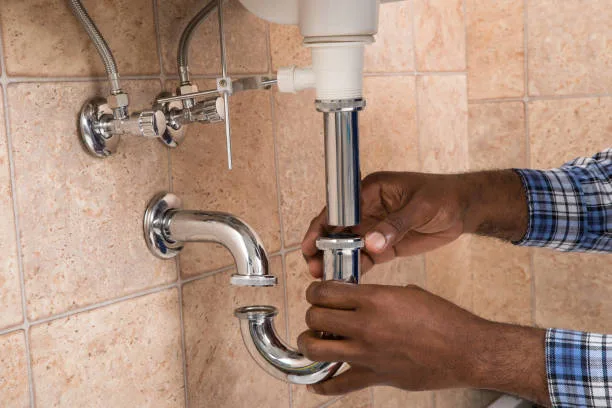
Your Credentials on Completion — Full Plumber
Candidates who achieve full competency across the practical assessment receive two formal credentials from Real Skills Technical FET, aligned to SAQA US 119075 and quality-assured by MERSETA. Both credentials are recognised by construction companies, plumbing contractors, municipalities, property developers, and facility management operations across South Africa and the broader region.
Certificate of Competence — Full Plumber
An official Certificate of Competence aligned to SAQA US 119075, issued by Real Skills Technical FET and quality-assured by MERSETA. The certificate confirms competency across the full scope of plumbing practice — water supply installation, drainage and sanitation, hot water systems, pipe jointing, valve and fitting installation, pressure testing, and SANS 10252 regulatory compliance. This is the primary credential that plumbing contractors, construction companies, municipalities, and facilities managers require when hiring qualified plumbers. On successful completion of this course, you qualify as a full plumber.
Recommendation Letter — Industry Endorsement
In addition to the Certificate of Competence, all successful graduates receive a formal Recommendation Letter from Real Skills Technical FET. This letter personally endorses the graduate's practical competency and professional conduct to prospective employers — providing an authoritative character and skills reference from a MERSETA-accredited training institution that carries significant weight with HR departments, site managers, and engineering recruitment agencies actively hiring qualified plumbers across South Africa.
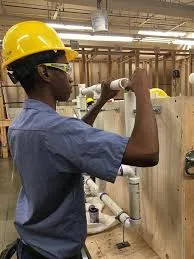
Entry Requirements — Who Can Enrol
✅ Plumbing Training Entry Requirements
No prior plumbing experience is required — we build your plumbing skills from scratch over 1 month of intensive practice
Our admissions team will assess your background and advise you on readiness for the course. Candidates who have done basic building, maintenance, or handyman work typically progress faster in week 1 — but the course is designed to take a motivated beginner with zero plumbing experience through to full plumber competency in one month.
Free Accommodation — Train From Anywhere
Why Plumbers Are in Constant Demand Across South Africa
Plumbing is the essential trade that keeps South Africa's built environment functioning. Every residential building, commercial complex, hospital, school, hotel, mine, factory, and municipal infrastructure project requires qualified plumbers for installation, maintenance and repair — and the persistent national shortage of MERSETA-certified plumbers means that qualified graduates enter employment fast, in every province and every sector.
Strong Trade Earnings
A qualified plumber earns between R15,000 and R40,000+ per month depending on experience, specialisation and whether working as an employee or self-employed contractor. Experienced plumbing contractors running their own businesses earn significantly more.
Construction & Housing Boom
South Africa's persistent housing backlog and continued commercial construction activity create structural, ongoing demand for qualified plumbers across all provinces — from large-scale housing developments to commercial fit-outs and infrastructure upgrades.
Healthcare & Hospitality
Hospitals, clinics, hotels, game lodges, and student residences all require dedicated plumbing maintenance and project installation personnel — these sectors offer stable, well-paying plumbing positions with consistent hours and long-term contracts.
Africa-Wide Opportunity
Infrastructure and urban development projects across sub-Saharan Africa — in Zambia, Mozambique, Tanzania, Angola and beyond — create a continent-wide demand for South African-trained plumbers that far exceeds local supply in those markets.
Scarce Skill = High Security
Plumbing is classified as a scarce and critical skill in South Africa. Every building requires plumbing — there is no sector of the economy where a qualified plumber cannot find employment. Job security in plumbing is among the highest of any trade.
Self-Employment Potential
Unlike most trades, plumbing offers strong self-employment potential. A registered, certified plumber can run their own plumbing contracting business — taking on domestic, commercial and maintenance contracts with no ceiling on earnings or growth.
Career Paths After Plumbing Training
Domestic Plumber
Residential plumbing installations, geyser replacements, drain unblocking, tap repairs, and bathroom and kitchen fit-outs for homeowners and property managers.
Construction Plumber
Plumbing installation on residential, commercial and mixed-use building construction projects — new developments, housing subsidies and large-scale civil projects.
Industrial Plumber
Process piping, compressed air lines, water treatment plant piping, and industrial water supply and drainage maintenance in manufacturing and mining facilities.
Maintenance Plumber
Ongoing facilities maintenance for commercial buildings, hospitals, schools, hotels, and large residential complexes — planned maintenance and reactive repair work.
Africa Projects
Infrastructure, urban development and mining projects across sub-Saharan Africa consistently recruit South African-trained and certified plumbers for project and site roles.
Plumbing Contractor
Register your own plumbing business — take on residential and commercial contracts, quote independently, and build a team. Full qualification is the foundation for self-employment.
Job Assistance Programme
Industry Connections
We work directly with plumbing contractors, construction companies, municipalities, property developers, and facility management companies who regularly hire our SAQA 119075 certified plumbing graduates by name.
CV & Recommendation Letter
Our team helps you present your Certificate of Competence and Recommendation Letter effectively on your CV — maximising your impact with site managers, HR departments, and plumbing recruiters actively looking for qualified practitioners.
Vacancy Alerts
Registration in our graduate database means direct notification of plumbing vacancies at partner companies — often before positions are advertised publicly. Plumbing vacancies fill fast; our network gets you there first.
Graduate Network
Join a growing community of working Real Skills plumbers across South Africa and sub-Saharan Africa — sharing job leads, contract opportunities, and field knowledge from active construction and maintenance sites.
Qualify as a Full Plumber — Start Next Month
1 month. R8,500. SAQA 119075. Water supply · Drainage · Hot water · Sanitation. Certificate of Competence + Recommendation Letter. Free accommodation. Job assistance — all in one course.
Frequently Asked Questions
Everything you need to know about plumbing training at Real Skills Technical FET
Plumbing training at Real Skills is a 1-month intensive workshop course aligned to SAQA US 119075, MERSETA accredited. It covers hot and cold water supply installation, drainage and sewage systems, sanitation fixture fitting, pipe jointing (soldering, compression, push-fit, threaded), valve and tap installation, geyser and hot water system connections, pressure testing, SANS 10252 plumbing regulations, and full OHS compliance. Graduates qualify as full plumbers.
The plumbing course runs for 1 month (approximately 20 full working days), Monday to Friday. The 4 weeks cover: Week 1 — OHS, pipe jointing techniques, cold water supply installation; Week 2 — drainage systems, sanitation fixtures and drain testing; Week 3 — hot water systems, geyser installation, SANS 10252 regulations; Week 4 — fault finding, applied full installation project, final practical assessment and certification.
You receive two credentials: a Certificate of Competence aligned to SAQA US 119075, quality-assured by MERSETA — confirming full plumber competency — and a Recommendation Letter from Real Skills Technical FET endorsing your practical skills and professional conduct to prospective employers. Together these credentials qualify you as a full plumber recognised by employers across South Africa and the region.
Plumbing training costs R8,500 — all-inclusive. This covers the full 1-month course, your own dedicated plumbing bay for the full month, all plumbing consumables and materials, the formal MERSETA-aligned assessment, your Certificate of Competence, your Recommendation Letter, job placement assistance, and free accommodation for the full month next to the training facility. There are no hidden costs.
Prior plumbing experience is not required. The minimum requirement is Grade 9 (NQF Level 1) education, basic numeracy, physical fitness for workshop and site work, manual dexterity, and the ability to attend full-time for 1 month. Some background in building, maintenance or handyman work is advantageous but not a barrier. Our instructors build your plumbing skills from the very first pipe joint through to full building installations in 1 month.
Yes. Real Skills Technical FET provides free student accommodation for the entire 1-month course for all plumbing training students. The accommodation is located next to the training facility — no transport costs or commuting stress. Whether you're from the Eastern Cape, Limpopo, or travelling internationally, travel to Pretoria and your housing for the full month is covered at zero extra cost.
Industry Resources for Plumbers
Key official links for plumbing training, trade qualification, and the South African engineering and built environment industry
MERSETA
Manufacturing, Engineering and Related Services SETA — the quality assurance body for plumbing trade training in South Africa, accrediting providers and quality-assuring assessments and certificates.
Visit MERSETASAQA — US 119075
Official SAQA registration for Unit Standard 119075 — the full plumber unit standard. Access the qualification scope, outcomes and assessment criteria on the national qualifications register.
View on SAQADepartment of Labour
OHS Act regulations, plumbing safety requirements, Water Services Act compliance, and the engineering trade regulations applicable to plumbing operations on South African construction and building sites.
Visit WebsiteRelated Engineering & Trade Courses
Build a broader skills portfolio — pair plumbing with a construction or electrical qualification for maximum employability


Qualify as a Full Plumber in 1 Month
Intensive workshop training. SAQA 119075, MERSETA accredited. R8,500 all-inclusive. Water supply · Drainage · Hot water systems · Sanitation. Certificate of Competence + Recommendation Letter. Free accommodation for the full month. Job placement assistance — all in one course.