
Pump Attendant Training School
Become a certified pump attendant (petrol attendant) in just 1 week at Real Skills Technical FET — safe fuel dispensing, forecourt operations, customer service, and service station compliance training aligned to the national standard.
Pump attendant training at Real Skills Technical FET is a 1-week intensive programme aligned to SAQA 62709 — National Certificate: Service Station Operations, NQF Level 2, quality-assured by W&R SETA (Wholesale and Retail Sector Education and Training Authority). The course develops the complete skill set required of a professional pump attendant — from safe fuel dispensing and forecourt operations, to customer service excellence, vehicle safety checks, cash handling, and full compliance with South Africa's fuel retail safety regulations. Graduates leave with a Certificate of Competence aligned to SAQA 62709, qualifying them as certified pump attendants recognised by all major fuel retailers and service stations across South Africa.
Pump Attendant Training — Course Overview
Our pump attendant training programme (also referred to as petrol attendant training) delivers the complete operational, safety, and customer service skills required to work professionally on the forecourt of any service station in South Africa. The course is built around the core competencies of the National Certificate: Service Station Operations (SAQA 62709) — covering safe fuel dispensing procedures, fire and safety compliance, vehicle fluid checks, customer service and communication, point-of-sale and cash handling basics, and shift-end forecourt management. The 1-week format is intensive and practical — learners spend significant time in simulated forecourt scenarios, building the real-world muscle memory required on Day 1 of employment.
National Certificate: Service Station Operations
1-week intensive programme — fuel dispensing · safety compliance · customer service · vehicle checks · cash handling
- 1-week full-time practical & theory training
- Safe fuel dispensing — petrol, diesel, LPG
- Forecourt safety — fire prevention & emergency procedures
- Hazardous substances handling and spill procedures
- Vehicle fluid checks — oil, water, tyre pressure
- Windscreen cleaning and basic vehicle exterior service
- Customer service and professional forecourt conduct
- Cash handling, payment processing and POS basics
- Fuel grade identification and quality compliance
- Shift management — opening, monitoring, closing
- OHS Act compliance for forecourt environments
- Certificate of Competence — SAQA 62709 · NQF Level 2

SAQA 62709 — National Certificate: Service Station Operations
SAQA 62709 is the nationally registered qualification titled National Certificate: Service Station Operations, NQF Level 2, quality-assured by W&R SETA (Wholesale and Retail Sector Education and Training Authority). This qualification is the recognised national standard for pump attendants and forecourt staff at South African service stations — covering the full operational scope of the forecourt attendant role, including fuel dispensing, safety compliance, customer service, vehicle checks, cash handling, and forecourt management.
The qualification is structured around three operational roles within the service station: forecourt attendant (fuel dispensing, vehicle checks, customer service), cashier (point-of-sale, cash handling, transaction management), and food handler (food safety and hygiene for service station convenience outlets). Our pump attendant training at Real Skills Technical FET focuses primarily on the forecourt attendant and safety competencies, equipping graduates to step directly into pump attendant roles at BP, Shell, Engen, Sasol, Total, Astron Energy and all major independent service stations across South Africa.
What You Learn — Pump Attendant Training Modules
The pump attendant training programme is built around the core operational and safety competencies required on any South African forecourt. All modules are delivered through practical demonstration, simulated forecourt scenarios, and assessed observation — not just classroom theory.
Safe Fuel Dispensing
Correct fuel dispensing procedure for petrol, diesel, and premium grades — nozzle handling, spillage prevention, over-fill prevention, correct grade selection
Fire Safety & Prevention
Forecourt fire hazards, fire prevention principles, fire extinguisher operation, emergency response procedures and evacuation protocols
Hazardous Substances
Safe handling and storage of flammable liquids, hazardous fuel vapours, chemical spill procedures, and personal protective equipment requirements
Vehicle Fluid Checks
Checking and topping up engine oil, coolant/water, battery water, brake fluid, power steering fluid, and windscreen washer fluid — correct procedures and safety precautions
Tyre Pressure Service
Checking and inflating tyre pressure to manufacturer specifications using forecourt air equipment — safety checks, tyre condition assessment, and reporting concerns
Windscreen & Exterior
Professional windscreen cleaning technique, checking wiper blades, exterior light checks — building customer confidence and generating tips through professional service
Customer Service
Professional forecourt greeting, communication with customers, handling requests, managing difficult interactions, building repeat customers through service excellence
Cash & Payment Handling
Accepting cash and card payments, making change correctly, preventing short-payments, identifying counterfeit notes, and processing transactions accurately and honestly
Shift Management
Opening and closing shift procedures, forecourt cleanliness standards, shift handover documentation, incident reporting, and maintaining forecourt appearance throughout the shift
OHS Act Compliance
Occupational Health and Safety Act requirements specifically applicable to service station forecourt environments — employee rights and responsibilities, reporting injuries and near-misses
Electrical & Static Safety
Static electricity risks during fuelling, earthing procedures, mobile phone prohibition, vehicle positioning, and electrical hazard awareness on the forecourt
Fuel Grades & Quality
Understanding petrol grades (93, 95, 98), diesel variants, LPG, AdBlue — identifying incorrect grade requests, cross-contamination prevention, and fuel quality compliance
Day-by-Day Training Structure — 5 Days to Certified
The pump attendant training week is structured to build knowledge and practical skills progressively — from foundational fuel and safety theory on Day 1 through to full simulated forecourt assessment on Day 5. Every day combines classroom instruction with hands-on practical application.
Full 5-Day Programme — What Happens Each Day
- Day 1 — Orientation & Fuel Knowledge: Introduction to South Africa's fuel retail sector, the role and responsibilities of a professional pump attendant, and the legal framework governing service station operations. Fuel types and grades — 93, 95, 98 octane petrol, 500ppm diesel, 50ppm diesel, LPG and AdBlue — their properties, appropriate uses, and the critical importance of correct grade dispensing. Introduction to forecourt equipment: pump islands, nozzles, meters, hoses, and safety cut-off mechanisms. Overview of fuel contamination risks, how to identify the wrong grade request, and escalation procedures.
- Day 2 — Safety, OHS & Hazardous Substances: Occupational Health and Safety Act requirements for service station forecourt environments — employee rights, employer responsibilities, reporting procedures, and the implications of non-compliance. Fire safety on the forecourt: fuel vapour characteristics, ignition sources, fire triangle, fire prevention, fire extinguisher types and operation (CO₂ and dry powder), emergency response procedures, and evacuation routes. Hazardous fuel vapour management, personal protective equipment selection and use, spill containment and cleanup procedures, and safe handling of LPG equipment. Electrical and static electricity hazards — static discharge risks during fuelling, vehicle earthing, mobile phone prohibition, prohibited items on the forecourt.
- Day 3 — Practical Fuel Dispensing & Vehicle Checks: Safe and professional fuel dispensing procedure — the step-by-step sequence every professional pump attendant follows: greeting the customer, confirming the fuel type, correctly positioning the nozzle, authorising the pump, monitoring the fill, preventing over-fill, and completing the transaction. Practising dispensing of petrol and diesel grades in simulated scenarios. Vehicle underbonnet checks: opening the bonnet safely, locating and checking engine oil level and condition, checking coolant/water level, battery water level, brake fluid, power steering fluid, and windscreen washer fluid — topping up correctly and communicating findings to the customer. Tyre pressure checking and inflation procedure, tyre condition visual assessment, windscreen cleaning technique, and wiper blade inspection.
- Day 4 — Customer Service Excellence & Cash Handling: Professional forecourt conduct and presentation: uniform standards, personal hygiene, punctuality, and how a professional pump attendant represents the brand of the service station to every customer. Greeting and communication techniques — building rapport, handling requests efficiently, managing difficult or impatient customers, upselling forecourt products and convenience store items politely. Cash handling: accepting notes, identifying counterfeit currency, counting and giving change correctly, short-payment prevention strategies, and maintaining transaction records. Introduction to card payment processing, point-of-sale (POS) terminal operation, and handling payment disputes professionally. Tips culture: how excellent, consistent service generates tips — and why this matters to the pump attendant's total daily income.
- Day 5 — Integrated Assessment & Certificate of Competence: Full practical competency assessment conducted in a simulated forecourt environment. Candidates are assessed against SAQA 62709 competency outcomes by a W&R SETA-aligned assessor: correct fuel dispensing procedure, vehicle fluid and tyre check execution, customer interaction and communication, cash handling accuracy, safety compliance (PPE, fire extinguisher knowledge, spill response), and shift management knowledge. Theory component: multiple-choice and short-answer assessment of fuel knowledge, OHS requirements, safety protocols, and customer service principles. Candidates assessed as Competent are issued their Certificate of Competence. A brief graduation ceremony concludes the week.
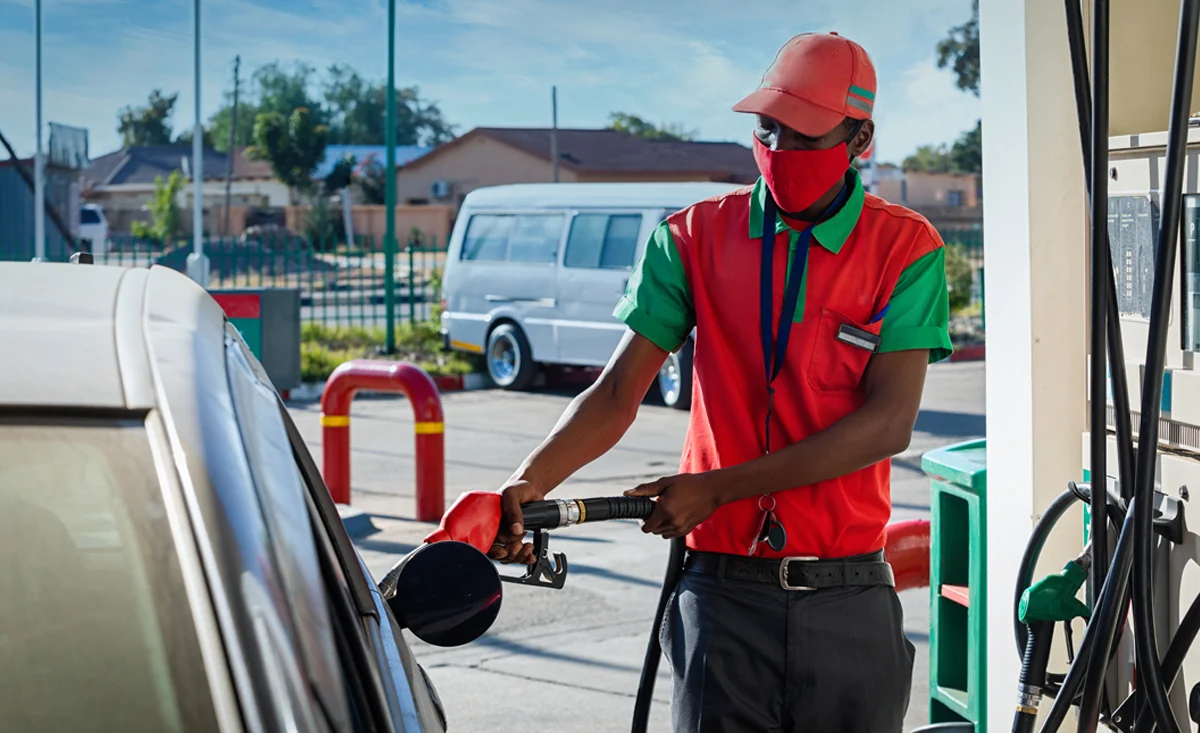
Your Credential — Certified Pump Attendant
Candidates who demonstrate full competency across all forecourt operations, safety, customer service, and cash handling modules receive a formal Certificate of Competence aligned to SAQA 62709 — National Certificate: Service Station Operations, NQF Level 2, quality-assured by W&R SETA. This credential is the recognised qualification that major fuel retailers and independent service stations look for when hiring pump attendants.
Certificate of Competence — SAQA 62709
An official Certificate of Competence aligned to SAQA 62709 — National Certificate: Service Station Operations, NQF Level 2, issued by Real Skills Technical FET and quality-assured by W&R SETA. The certificate confirms competency in safe fuel dispensing, forecourt safety compliance, vehicle checks, customer service, and cash handling — the complete professional skill set of a certified pump attendant. This qualification is required or preferred by BP, Shell, Engen, Sasol, Total, Astron Energy and major independent service station groups when hiring forecourt staff, and is recognised across all nine South African provinces and throughout the SADC fuel retail sector.
Who Accepts This Certificate: South Africa has approximately 4,800 formal service stations across the country. The vast majority — whether branded (BP, Shell, Engen, Sasol, Total, Astron/Caltex) or independent — prefer or require forecourt staff to hold a formal, W&R SETA-aligned certification. Our Certificate of Competence meets this standard and positions our graduates as preferred candidates over uncertified applicants for all pump attendant, forecourt supervisor, and senior forecourt attendant roles.
Entry Requirements — Who Can Enrol
✅ Pump Attendant Training Entry Requirements
No experience required — our 1-week programme builds all your forecourt skills from the ground up
The pump attendant course is designed to take anyone from zero to certified in one week. Whether you are a first-time job seeker, someone returning to the workforce, or an experienced pump attendant who needs a formal qualification to satisfy an employer requirement — the 5-day course covers everything you need to pass your competency assessment and present a credible Certificate of Competence to any service station in the country.
Free Accommodation — Travel From Anywhere
Why Pump Attendant Jobs Are Always in Demand
South Africa has approximately 4,800 formal service stations operating 365 days a year, 24 hours a day. Every single station needs multiple pump attendants on each shift. The combination of high staff turnover in the fuel retail sector, South Africa's growing vehicle fleet, and the continued dominance of full-service forecourts means that pump attendant jobs are one of the most consistently available entry-level positions in the country — for candidates with the right training.
4,800 Service Stations
South Africa operates approximately 4,800 formal service stations — all requiring multiple certified pump attendants on every shift, every day of the year. This creates a constant, nationwide demand for trained, certified forecourt staff.
No Matric Required
Pump attendant jobs are one of the most accessible entry-level employment pathways in South Africa — requiring only Grade 9 plus training, making them ideal for young job seekers, school leavers, and experienced workers seeking formal credentials.
Salary + Tips Income
Pump attendants earn a basic salary between R4,000 and R7,500 per month depending on the station and province, supplemented by tips that can add R1,000 to R3,000+ per month for service-focused, professional attendants.
Fast Career Progression
Certified pump attendants with professional conduct and good performance can advance to senior attendant, shift supervisor, forecourt supervisor, and station manager roles within 12–24 months — all within the same service station network.
Nationwide Employment
Pump attendant jobs exist in every town, city, and province in South Africa — from Cape Town and Johannesburg to small rural towns — giving our graduates maximum employment flexibility anywhere in the country.
Foundation for Retail Careers
The SAQA 62709 qualification provides a recognised NQF Level 2 foundation for further study in retail operations, supervisory management, or business management — building a path to longer-term career growth beyond the forecourt.
Career Paths After Pump Attendant Training
Pump Attendant
Serve customers with fuel and professional vehicle checks at any of South Africa's 4,800+ service stations — the direct, immediate employment outcome of the course.
Senior Forecourt Attendant
Lead the service experience on the forecourt — responsible for quality control, new attendant mentoring, and maximising tip income through exceptional customer service.
Shift Supervisor
Oversee forecourt operations during a shift — managing 4–10 pump attendants, ensuring safety compliance, and reporting to the station manager at shift end.
Cashier / POS Operator
Transition to the service station's pay kiosk or shop cashier role — processing fuel pre-payments, card transactions, and shop purchases. Higher base salary.
Convenience Store Staff
Work in the service station's attached shop or food outlet — customer service, shelf packing, till operation, and food handling in one of South Africa's busiest retail formats.
Station Supervisor / Manager
With experience and further qualifications, advance to station supervisor and eventually station manager — responsible for all staff, operations, inventory, and financial performance of the station.
Job Placement Assistance — Find Work Fast
Service Station Connections
We work with service station groups, fuel retail operators, and independent garage owners across Gauteng and neighbouring provinces who regularly hire our certified pump attendant graduates — often before they even finish the course week.
CV & Certificate Presentation
We help you format your CV to correctly showcase your Certificate of Competence — SAQA 62709, W&R SETA, NQF Level 2 — in the way that service station HR managers and proprietors want to see when selecting candidates for interviews.
Vacancy Alerts
Register in our graduate database and receive direct notification of pump attendant vacancies from partner service stations across Gauteng, Limpopo, North West, and Mpumalanga — often ahead of public advertising.
Graduate Network
Join the Real Skills pump attendant graduate network — hundreds of working forecourt professionals who share job opportunities, station openings, and career advice across South Africa's fuel retail sector.
Become a Certified Pump Attendant — Start Next Monday
1 week. R3,000 all-inclusive. SAQA 62709 · NQF Level 2. Certificate of Competence. Free accommodation. Weekly intakes — start any Monday.
Frequently Asked Questions
Everything you need to know about pump attendant training at Real Skills Technical FET
Pump attendant training (also called petrol attendant training) is a 1-week intensive course aligned to SAQA 62709 — National Certificate: Service Station Operations, NQF Level 2, W&R SETA accredited. It covers safe fuel dispensing (petrol, diesel, LPG), fire safety and OHS compliance, vehicle underbonnet fluid checks, tyre pressure servicing, windscreen cleaning, professional customer service, cash handling, and shift management. Graduates receive a Certificate of Competence valid at all major service stations in South Africa.
The pump attendant training course runs for 1 week — 5 full working days, Monday to Friday. Day 1 covers fuel knowledge and orientation. Day 2 covers fire safety and OHS compliance. Day 3 focuses on practical fuel dispensing and vehicle checks. Day 4 covers customer service and cash handling. Day 5 is the full practical competency assessment — graduates receive their Certificate of Competence the same day.
You receive a Certificate of Competence aligned to SAQA 62709 — National Certificate: Service Station Operations, NQF Level 2, quality-assured by W&R SETA. This credential confirms competency in all core forecourt operations and is recognised by BP, Shell, Engen, Sasol, Total, Astron Energy, and all major independent service station groups across South Africa as the standard qualification for professional pump attendants.
Pump attendant training costs R3,000 — completely all-inclusive. The fee covers the full 5-day course, all training materials, personal protective equipment used during training, the W&R SETA-aligned practical competency assessment, your Certificate of Competence, job placement assistance, and free accommodation for the full week next to the training facility. There are no hidden costs, registration fees, or extras of any kind.
No matric and no prior experience are required. The minimum requirement is Grade 9 education, basic reading and numeracy in English, and the ability to attend full-time for 5 days. The 1-week programme is designed to take someone with no forecourt experience and deliver fully competent, certified pump attendant skills — from fuel grade knowledge and safe dispensing through to safety compliance, vehicle checks, and customer service. A willingness to work hard and learn is all that's needed.
Yes — free student accommodation is provided for the full 1-week course, located next to the training facility. This applies to all students from across South Africa and from SADC countries. The R3,000 all-inclusive fee already covers your accommodation. We advise students to arrive the Sunday before the course starts (Monday) so you are rested and ready for Day 1.
Industry Resources for Pump Attendants
Official links for pump attendant qualifications, fuel retail training standards, and the W&R SETA
W&R SETA
Wholesale and Retail Sector Education and Training Authority — quality assurance body for pump attendant and service station operations training in South Africa, accrediting providers and overseeing SAQA 62709 assessments.
Visit W&R SETASAQA — ID 62709
Official SAQA registration for SAQA 62709 — National Certificate: Service Station Operations, NQF Level 2. Access the full qualification scope, unit standards and assessment requirements on the national qualifications register.
View on SAQADept. of Labour — OHS
Department of Employment and Labour resources on the Occupational Health and Safety Act as it applies to hazardous substance environments — relevant to all service station forecourt workers and employers in South Africa.
Visit WebsiteRelated Courses at Real Skills
Build additional qualifications to broaden your career options in health, welfare and technical fields



Become a Certified Pump Attendant in 1 Week
Full practical forecourt training. SAQA 62709, NQF Level 2, W&R SETA accredited. R3,000 all-inclusive. Certificate of Competence. Free accommodation. Job placement assistance — everything in one 5-day programme.